
BUSINESS
How to Safeguard Creative Content and Brand Assets

In today’s digital economy, businesses invest significant time, effort, and resources into creating valuable content and building recognizable brands. From website copy and marketing materials to logos, slogans, videos, and product designs, these assets play a crucial role in attracting customers and establishing a competitive advantage.
However, as businesses expand their online presence, the risk of unauthorized copying, misuse, and infringement also increases. Competitors, counterfeiters, and content thieves can exploit valuable intellectual property if adequate protections are not in place. For this reason, every business owner should understand how to safeguard both creative content and brand assets effectively.
By implementing the right legal, technological, and operational strategies, businesses can protect their intellectual property and preserve the value of their creative work.
Understanding the Difference Between Creative Content and Brand Assets
Before implementing protection strategies, it is important to distinguish between creative content and brand assets.
Creative content generally includes:
- Blog articles
- Website content
- Videos
- Photographs
- Graphic designs
- Software code
- Marketing materials
- Educational resources
Brand assets typically include:
- Business names
- Product names
- Logos
- Taglines
- Slogans
- Brand colors and visual identity elements
Although both categories represent valuable intellectual property, they are protected through different legal mechanisms and require different approaches to risk management.
Why Intellectual Property Protection Matters
Many businesses underestimate the value of their intellectual property until it is copied or misused.
Strong protection offers several important benefits:
- Preserves competitive advantages
- Prevents unauthorized use
- Protects brand reputation
- Supports revenue generation
- Increases business valuation
- Enhances customer trust
Without proper safeguards, competitors may benefit from your hard work while weakening your market position.
Protecting intellectual property should be viewed as an essential component of any long-term business strategy.
Register Your Trademarks
One of the most effective ways to protect brand assets is through trademark registration.
Trademarks help identify the source of goods or services and distinguish a business from competitors. Important brand elements that may qualify for trademark protection include:
- Company names
- Product names
- Logos
- Slogans
- Brand symbols
Federal trademark registration provides stronger legal rights and makes it easier to enforce ownership against infringers.
Businesses that rely heavily on brand recognition should prioritize trademark protection early in their growth journey.
Protect Original Creative Content Through Copyright
Creative works often qualify for copyright protection.
Copyright safeguards original works of authorship, including:
- Written content
- Images
- Videos
- Music
- Graphic designs
- Software programs
Although copyright protection generally exists automatically when a work is created, formal registration can provide significant legal advantages if infringement occurs.
Copyright registration strengthens enforcement efforts and may provide access to additional legal remedies.
Businesses that produce large amounts of original content should consider maintaining a structured copyright management strategy.
Understand Trademark vs Copyright Protection
One of the most common mistakes business owners make is misunderstanding the difference between various forms of intellectual property protection.
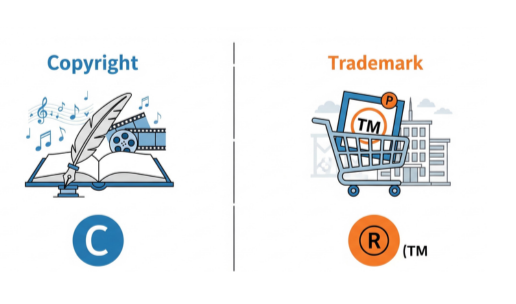
When evaluating trademark vs copyright protection, it is important to remember that trademarks protect brand identifiers, while copyrights protect original creative works.
For example:
- A company logo may function as a trademark.
- The artistic design of that logo may also qualify for copyright protection.
- A slogan may receive trademark protection.
- A blog article may receive copyright protection.
Understanding which form of protection applies to each asset helps businesses build a more comprehensive intellectual property strategy.
Monitor Your Brand Online
Protecting intellectual property is not a one-time task. Ongoing monitoring is essential.
Businesses should regularly search for:
- Unauthorized use of logos
- Counterfeit products
- Domain name abuse
- Social media impersonation
- Copycat branding
- Trademark infringement
Early detection often makes enforcement easier and prevents larger problems from developing.
Many companies use trademark monitoring services or online brand protection tools to identify potential violations quickly.
Protect Digital Content With Watermarks and Notices
While legal protections are important, technological safeguards can also help discourage misuse.
Businesses may choose to use:
- Copyright notices
- Watermarks on images
- Metadata information
- Usage terms and conditions
- Digital rights management tools
Although these measures may not stop determined infringers, they can reduce unauthorized use and strengthen legal claims if disputes arise.
Visible ownership indicators often discourage casual content theft.
Establish Clear Ownership Agreements
Ownership disputes can occur even within an organization if intellectual property rights are not properly documented.
Businesses should ensure that:
- Employee agreements address intellectual property ownership
- Contractor agreements include assignment clauses
- Licensing agreements clearly define usage rights
- Partnership agreements specify ownership responsibilities
Clear contractual provisions help prevent future disputes and establish legal ownership of valuable assets.
This is particularly important for businesses that work with freelance designers, writers, developers, or marketing agencies.
Secure Sensitive Business Information
Not all valuable intellectual property should be publicly disclosed.
Trade secrets can provide significant competitive advantages when properly protected.
Examples include:
- Customer databases
- Marketing strategies
- Manufacturing processes
- Proprietary formulas
- Business methods
Businesses should implement confidentiality measures such as:
- Non-disclosure agreements (NDAs)
- Restricted access policies
- Employee confidentiality training
- Secure document storage systems
Maintaining secrecy is essential for preserving trade secret protection.
Create an Intellectual Property Inventory
Many organizations struggle to protect assets because they lack a complete understanding of what they own.
Developing an intellectual property inventory can help businesses identify and manage valuable assets.
An inventory may include:
- Registered trademarks
- Copyrighted works
- Patent filings
- Trade secrets
- Domain names
- Marketing materials
- Brand guidelines
Regular audits help ensure that important assets remain properly protected and maintained.
An organized inventory also supports business transactions, licensing opportunities, and investment discussions.
Respond Quickly to Infringement
When infringement occurs, swift action is often critical.
Ignoring unauthorized use can allow violations to spread and weaken intellectual property rights.
Potential responses may include:
- Sending cease-and-desist letters
- Filing DMCA takedown requests
- Reporting counterfeit listings
- Initiating trademark enforcement actions
- Pursuing legal remedies when necessary
Prompt enforcement demonstrates a commitment to protecting intellectual property and can discourage future violations.
Businesses that consistently enforce their rights are often better positioned to maintain strong brand protection.
Educate Employees About Intellectual Property
Employees frequently interact with valuable company assets.
Providing intellectual property training can help staff understand:
- Ownership rights
- Brand usage guidelines
- Confidentiality obligations
- Copyright compliance
- Trademark protection practices
A well-informed team is less likely to accidentally expose sensitive information or misuse intellectual property.
Employee awareness plays an important role in long-term asset protection.
Develop a Long-Term Intellectual Property Strategy
Intellectual property protection should not be viewed as a one-time legal task.
As businesses grow, their portfolios often expand to include:
- New products
- Additional trademarks
- Expanded content libraries
- Innovative technologies
- International markets
A proactive intellectual property strategy helps ensure that protections evolve alongside business growth.
Regular reviews allow businesses to identify emerging risks and address vulnerabilities before they become significant problems.
Conclusion
Creative content and brand assets are among the most valuable resources a business can own. Whether it’s a company logo, website content, marketing campaign, software program, or product design, these assets contribute directly to brand recognition, customer trust, and business success.
By understanding intellectual property rights, registering appropriate protections, monitoring for infringement, and implementing strong internal safeguards, businesses can significantly reduce risk and preserve the value of their creations. Understanding the difference between a trademark and a copyright is the first step in developing a comprehensive protection strategy that safeguards both brand identity and creative expression for years to come.
The oil and gas sector has always been international by nature. Resources are located in different parts of the world, supply chains stretch across continents, and investors constantly look beyond their home markets for growth opportunities. Because of this, mergers and acquisitions often involve companies, assets, and stakeholders from multiple countries.
When people talk about large energy deals, they usually focus on valuation, reserves, production capacity, or market share. Those factors matter, but there is another side that can determine whether a transaction succeeds or struggles: managing complex cross border transactions.
I have seen many companies spend months negotiating a deal only to discover unexpected banking, regulatory, tax, or payment challenges once the acquisition process begins. In oil and gas, where transactions can involve hundreds of millions or even billions of dollars, even a small oversight can create significant delays.
Whether you are acquiring overseas assets, merging with an international operator, or attracting foreign investment, there are several important factors that deserve attention before the deal is signed.
Why Cross-Border M&A Activity Continues to Grow in Oil and Gas
Energy companies face constant pressure to secure reserves, improve operational efficiency, and gain access to new markets. In many cases, acquiring an existing business is faster than building operations from scratch.
Several trends continue to drive international deal activity:
- Growing demand for energy security
- Expansion into emerging markets
- Consolidation among producers
- Access to specialized technology
- Diversification of resource portfolios
- Strategic investments in infrastructure
At the same time, governments are increasingly encouraging foreign investment in certain energy projects while tightening oversight in others. This creates opportunities, but it also adds complexity to every transaction.
Unlike domestic acquisitions, international deals require companies to evaluate multiple legal systems, currencies, banking structures, and regulatory frameworks simultaneously.
Due Diligence Goes Far Beyond Financial Statements
Every acquisition begins with due diligence, but in cross-border deals, the process becomes significantly more detailed.
A buyer may review:
- Asset ownership records
- Environmental liabilities
- Licensing agreements
- Production contracts
- Tax obligations
- Local labor requirements
- Existing financing arrangements
For oil and gas companies, environmental compliance often becomes a major area of investigation. A facility that appears profitable on paper could carry substantial remediation costs that only become visible during deeper review.
Similarly, operating licenses may contain restrictions related to ownership changes. In some jurisdictions, government approval is required before assets can be transferred to a foreign entity.
The earlier these issues are identified, the easier they are to address before they threaten the transaction timeline.
The Banking Infrastructure Behind Successful Cross Border Transactions
One aspect that is frequently underestimated is financial infrastructure.
Large acquisitions involve multiple stages of funding, escrow arrangements, foreign exchange management, and post-acquisition integration. Without reliable banking support, even a well-structured deal can face unnecessary obstacles.
Companies involved in international M&A often require:
- Access to multiple currencies
- International treasury management
- Foreign exchange support
- Secure payment channels
- International settlement capabilities
This is where cross-border banking solutions become particularly important.
For example, an energy company headquartered in Europe may acquire producing assets in Africa while using financing from North American investors. The transaction may involve several currencies, multiple financial institutions, and payment obligations across different jurisdictions.
Managing these flows efficiently requires banking partners that understand international corporate structures and large-scale transactions.
Currency Risk Can Change the Economics of a Deal
Currency fluctuations can have a major impact on acquisition costs.
Imagine a company negotiating an acquisition valued in U.S. dollars while its primary funding source is denominated in euros. If exchange rates move significantly during negotiations, the actual cost of the acquisition can change considerably.
This risk becomes even more important when transactions take several months to complete.
Many companies address this challenge through:
- Currency hedging programs
- Forward contracts
- Treasury risk management strategies
- Multi-currency settlement structures
Businesses that rely solely on traditional banking arrangements often find themselves exposed to avoidable foreign exchange costs.
This is one reason why many international operators utilize multi-currency accounts for global businesses as part of their broader acquisition strategy. These structures can simplify payments while improving visibility across multiple jurisdictions.
Regulatory Reviews Often Determine the Timeline
One of the biggest differences between domestic and international acquisitions is regulatory scrutiny.
Governments often consider oil and gas assets strategically important. As a result, foreign ownership may trigger additional reviews.
Depending on the country, authorities may examine:
- National security concerns
- Competition implications
- Energy supply considerations
- Environmental commitments
- Employment impact
- Foreign investment regulations
Some approvals can take weeks. Others may take many months.
A transaction that appears straightforward at the negotiation stage can quickly become more complicated if multiple regulators become involved.
Companies that begin regulatory planning early generally experience fewer surprises during execution.
Tax Structures Require Careful Planning
Tax considerations influence nearly every stage of an international acquisition.
The structure selected for the transaction can affect:
- Corporate income tax
- Withholding tax
- Capital gains tax
- Transfer pricing obligations
- Future dividend distributions
What works efficiently in one country may create challenges in another.
For example, acquiring shares instead of assets may offer advantages in one jurisdiction while producing unfavorable tax outcomes elsewhere.
Because of these differences, buyers frequently engage tax specialists during the earliest stages of the process rather than waiting until documentation is finalized.
Good planning can significantly reduce long-term costs while improving post-acquisition integration.
Managing International Payment Flows During an Acquisition
Funding an acquisition is rarely as simple as transferring money from one account to another.
Effective Cross-Border Payment for Oil and Gas Companies is about much more than transferring funds between countries. Energy businesses often deal with suppliers, contractors, investors, and regulators across multiple jurisdictions. Having the right payment infrastructure in place helps reduce settlement delays, improve transparency, and support compliance requirements throughout the transaction process.
Large oil and gas transactions often involve:
- Escrow arrangements
- Milestone payments
- Earn-out structures
- Shareholder distributions
- Debt settlements
- Regulatory deposits
These payment requirements create additional pressure on treasury teams.
Modern global payment solutions help companies move funds efficiently across borders while maintaining transparency and compliance.
The objective is not simply moving money. It is ensuring every payment reaches the correct destination, in the correct currency, while meeting regulatory requirements.
When billions of dollars are involved, accuracy becomes just as important as speed.
Political Risk Cannot Be Ignored
Political stability plays a major role in energy investments.
Governments can introduce new regulations, alter taxation frameworks, modify licensing conditions, or implement restrictions that directly impact project economics.
Investors evaluating international acquisitions often assess:
- Political stability
- Legal certainty
- Contract enforcement
- Currency controls
- Investment protection agreements
A highly profitable asset may appear attractive initially, but political uncertainty can significantly increase long-term risk.
This does not mean companies should avoid emerging markets. Many successful acquisitions occur in developing economies. The key is accurately assessing the risk and incorporating it into transaction planning.
Technology and Data Integration After the Deal
Closing the transaction is only the beginning.
Once ownership changes, businesses must integrate systems, processes, and reporting structures.
Oil and gas companies often operate:
- Production monitoring platforms
- Financial reporting systems
- Supply chain software
- Health and safety databases
- Environmental compliance systems
Bringing these systems together can be challenging, particularly when operations span multiple countries.
Differences in reporting standards, cybersecurity requirements, and operational procedures can create integration delays if they are not addressed early.
Companies that include integration planning during due diligence typically achieve smoother transitions after closing.
Choosing the Right Financial Partners
One lesson repeatedly seen in international M&A is that not all financial institutions are equipped to support complex energy transactions.
Companies often require partners with experience handling:
- International corporate structures
- Multi-jurisdiction operations
- Foreign exchange management
- Large-value settlements
- Regulatory compliance
Strong global financial partners can help reduce operational friction throughout the transaction lifecycle.
Likewise, businesses increasingly seek global banking solutions that provide visibility across multiple regions rather than relying on disconnected local relationships.
A coordinated approach often improves efficiency and reduces administrative burdens after the acquisition is completed.
A Practical Example
Consider a mid-sized energy company based in Europe acquiring a drilling services provider in the Middle East.
At first glance, the transaction appears straightforward. The buyer likes the target’s customer base, equipment fleet, and regional presence.
However, during the acquisition process, several challenges emerge:
- Regulatory approvals are required in two countries.
- Existing contracts must be reassigned.
- Revenues are received in multiple currencies.
- Banking arrangements differ across jurisdictions.
- Tax treatment varies between operating entities.
- Payment schedules must accommodate several stakeholders.
Without careful planning, these issues could delay closing by months.
By establishing the right banking structure, securing experienced advisors, and preparing treasury systems in advance, the company can significantly reduce execution risk.
This example highlights why successful transactions involve much more than negotiating purchase price.
What Buyers Should Prioritize Before Signing
Before committing to an international acquisition, oil and gas companies should evaluate several critical areas.
First, verify that regulatory approvals are realistically achievable.
Second, assess banking and treasury requirements early rather than treating them as an administrative task.
Third, evaluate foreign exchange exposure throughout the transaction timeline.
Fourth, review environmental obligations in detail.
Finally, ensure post-acquisition integration planning begins before closing, not afterward.
Companies that address these factors proactively tend to complete transactions more efficiently and avoid costly surprises.
Final Thoughts on Cross Border Transactions in Oil and Gas
International dealmaking will continue to play a major role in the future of the energy sector. As companies pursue new reserves, infrastructure assets, and strategic partnerships, cross-border acquisitions will remain an important growth strategy.
However, successful cross border transactions require much more than identifying an attractive target. They demand careful planning across regulatory, financial, operational, and banking functions.
The organizations that consistently execute successful deals are usually the ones that prepare for complexity rather than reacting to it. By combining strong due diligence, reliable cross-border banking solutions, effective global payment solutions, and access to trusted global banking solutions, oil and gas companies can position themselves for smoother acquisitions and stronger long-term outcomes.
In a sector where every decision carries significant financial implications, preparation often becomes the difference between a successful transaction and an expensive lesson.

Financial accuracy is one of the foundations of a successful business. Every decision, from hiring employees to investing in growth, depends on reliable financial information. However, many businesses struggle to maintain accurate records as operations become more complex.
Small errors in bookkeeping can lead to tax problems, cash flow issues, and poor business decisions. This is why many companies invest in bookkeeping consulting services to ensure their financial records remain accurate and up to date.
For international businesses, the need becomes even greater when managing multiple markets, foreign employees, and cross-border operations.
Why Financial Accuracy Matters for Every Business
Business owners rely on financial data to make important decisions every day.
Accurate records help companies:
- Track revenue and expenses
- Monitor profitability
- Prepare tax filings
- Manage cash flow
- Plan future growth
- Meet compliance requirements
Without reliable financial information, businesses may struggle to understand their actual financial position.
Many companies realize this only after facing reporting errors or tax-related issues.
This is where bookkeeping consulting services become valuable.
What Are Bookkeeping Consulting Services?
Bookkeeping involves recording and organizing financial transactions. However, modern bookkeeping goes beyond simple data entry.
Professional bookkeeping consulting services help businesses:
- Maintain accurate financial records
- Improve reporting processes
- Identify accounting errors
- Monitor cash flow
- Prepare for audits
- Support business planning
Rather than simply recording transactions, consultants help businesses create systems that improve financial visibility.
As a result, management teams gain a clearer understanding of business performance.
Common Financial Mistakes Businesses Make
Many businesses experience financial inaccuracies due to poor bookkeeping practices.
Some common issues include:
Missing Expense Records
When expenses are not recorded properly, financial reports become inaccurate.
This can create problems during tax filing and financial reviews.
Incorrect Revenue Tracking
Revenue recognition errors can distort profitability reports.
Business owners may believe performance is stronger or weaker than reality.
Payroll Reporting Errors
Payroll mistakes can affect employees and create compliance risks.
This becomes particularly important when managing payroll for foreign employees across different countries.
Delayed Financial Updates
Many businesses update records weeks or months after transactions occur.
This makes it difficult to make informed business decisions.
Professional bookkeeping consulting services help prevent these problems by creating structured financial processes.
How Bookkeeping Consulting Services Improve Financial Accuracy
Accurate bookkeeping requires consistency and attention to detail.
Experienced consultants help businesses improve accuracy through several methods.
Creating Standardized Processes
A consistent bookkeeping process reduces errors.
Consultants often establish procedures for:
- Recording transactions
- Managing invoices
- Tracking expenses
- Reconciling accounts
- Reviewing reports
Standardization improves accuracy across the entire organization.
Regular Financial Reviews
Routine reviews help identify discrepancies before they become major issues.
Financial consultants often review:
- Bank reconciliations
- Expense records
- Revenue reports
- Payroll transactions
These reviews help maintain accurate records throughout the year.
Better Financial Reporting
Reliable reporting allows businesses to monitor performance more effectively.
Accurate reports support:
- Budget planning
- Cash flow forecasting
- Profitability analysis
- Investment decisions
This is one of the biggest advantages of professional bookkeeping consulting services.
The Connection Between Bookkeeping and Payroll Management
Payroll is often one of the largest expenses for a business.
Because of this, payroll data must be recorded accurately.
Companies managing payroll for foreign employees face additional challenges because employment regulations vary between countries.
Bookkeeping systems must accurately capture:
- Employee salaries
- Tax deductions
- Social security contributions
- Benefits expenses
- Payroll liabilities
Without proper bookkeeping, payroll errors can affect financial statements and compliance reporting.
Many businesses use bookkeeping consultants to ensure payroll transactions are correctly reflected in their records.
Why International Companies Need Strong Bookkeeping Systems
International businesses often deal with greater financial complexity.
They may operate across multiple jurisdictions, currencies, and regulatory environments.
For example, businesses that hire employees without entity structures often face additional administrative requirements.
Even when a company does not establish a local legal entity immediately, it may still need to manage payroll, employee costs, and reporting obligations correctly.
Accurate bookkeeping helps businesses maintain control over these financial responsibilities.
Supporting Companies That Hire Employees Without Entity
Many international businesses choose to hire employees without entity arrangements when entering new markets.
This approach allows them to:
- Test new markets
- Reduce startup costs
- Hire talent quickly
- Expand gradually
However, workforce costs still need to be tracked accurately.
Businesses that hire employees without entity often work with payroll providers and bookkeeping consultants to ensure proper financial reporting.
Similarly, employee-related expenses must be categorized correctly to maintain compliance and support business planning.
Key Benefits of Bookkeeping Consulting Services
Professional bookkeeping support provides several important advantages.
Better Financial Visibility
Accurate records provide a clear picture of business performance.
Management teams can make decisions based on reliable data rather than assumptions.
Improved Compliance
Proper bookkeeping supports tax reporting and regulatory compliance.
This reduces the risk of penalties and reporting issues.
Stronger Cash Flow Management
Cash flow is critical for business stability.
Bookkeeping consultants help companies monitor incoming and outgoing funds more effectively.
Reduced Administrative Burden
Business owners often spend significant time managing financial records.
Outsourcing bookkeeping tasks allows them to focus on growth and operations.
Better Support for Growth
As businesses expand, financial processes become more complex.
Professional bookkeeping consulting services help companies build systems that can scale alongside growth.
Signs Your Business Needs Bookkeeping Support
Many companies wait too long before seeking professional assistance.
Several warning signs may indicate a need for bookkeeping support.
These include:
- Frequent accounting errors
- Delayed financial reports
- Difficulty tracking expenses
- Unclear cash flow visibility
- Payroll reporting problems
- Rapid business growth
Addressing these issues early can prevent larger financial challenges later.
Questions to Ask When Choosing a Bookkeeping Consultant
Before selecting a provider, businesses should evaluate several factors.
Do They Understand Your Industry?
Industry-specific experience often improves service quality.
Different sectors have unique reporting requirements and financial challenges.
Can They Support International Operations?
Businesses managing payroll for foreign employees should choose consultants familiar with international workforce structures.
What Reporting Tools Do They Use?
Modern bookkeeping systems improve efficiency and reporting accuracy.
Cloud-based solutions often provide greater visibility and accessibility.
Can They Scale With Business Growth?
The right provider should be able to support future expansion.
This is especially important for businesses planning to hire employees without entity arrangements in multiple markets.
The Long-Term Value of Financial Accuracy
Accurate financial records create benefits far beyond compliance.
They help businesses:
- Improve profitability
- Control costs
- Plan investments
- Monitor growth
- Support strategic decisions
Financial accuracy becomes increasingly important as companies expand into new markets and manage larger teams.
Businesses that invest in strong bookkeeping processes are often better positioned for sustainable growth.
Conclusion
Financial accuracy is essential for every business, regardless of size or industry. Poor bookkeeping can lead to reporting errors, compliance issues, and poor decision-making.
Professional bookkeeping consulting services help businesses maintain accurate records, improve reporting quality, and support long-term growth. They provide the structure and expertise needed to keep financial information reliable and actionable.
For companies managing payroll for foreign employees or planning to hire employees without entity structures, accurate bookkeeping becomes even more important. Proper financial management helps businesses remain compliant while providing the visibility needed to make confident business decisions.
Investing in professional bookkeeping support is not simply about recordkeeping. It is about creating a strong financial foundation for future success.

Your teeth do a lot more than help you smile. They help you eat your favorite foods. They help you speak clearly. They also play a big role in your confidence. But dental problems can show up quietly. One day your teeth feel fine. Then suddenly there is pain sensitivity, bleeding gums or bad breath that will not go away.
The good thing is this. Many dental problems can be prevented with simple daily habits. You do not need a complicated routine. You just need to stay consistent and pay attention to small warning signs.
If you live in Houston and want to keep your smile healthy this guide will walk you through common dental issues and easy ways to prevent them.
Why Dental Health Matters
Oral health is not only about white teeth. Healthy teeth and gums make daily life easier. You can chew without pain. You can smile without feeling shy. You can speak without discomfort.
When dental issues are ignored they can affect more than your mouth. Tooth pain can disturb your sleep. Gum problems can make eating uncomfortable. Bad breath can hurt your confidence. That is why preventive care matters so much.
A regular visit to a Family dental clinic Houston can help catch small issues early. Many dental problems are easier and cheaper to treat when they are found at the beginning.
Tooth Decay
Tooth decay is one of the most common dental problems. It happens when plaque builds up on your teeth. Plaque has bacteria that produce acid. This acid slowly weakens the tooth enamel and can lead to cavities.
You may notice sensitivity pain while eating dark spots or tiny holes in the tooth. Sometimes decay does not cause pain at first. That is why checkups are important even when your mouth feels fine.
To prevent tooth decay, brush your teeth twice a day. Floss once a day. Drink water after sweet foods. Try to limit soda candy and sticky snacks. These small habits can protect your teeth more than you think.
Gum Disease
Gum disease starts when plaque collects around the gums. In the early stage your gums may bleed when you brush or floss. They may look red, swollen or tender.
If gum disease is ignored it can become more serious. The gums may pull away from the teeth. The bone that supports the teeth can become weak. In advanced cases teeth may loosen.
The best way to prevent gum disease is to clean your gums daily. Brush gently along the gumline. Floss between your teeth. Do not skip professional cleanings. Tartar cannot be removed at home so a dentist or hygienist needs to clean it.
Tooth Sensitivity
Tooth sensitivity can be really annoying. A sip of cold water or a bite of something sweet can cause a sharp feeling. This may happen due to worn enamel gum recession cavities or small cracks.
Using a toothpaste made for sensitive teeth can help. Also avoid brushing too hard. A soft toothbrush is usually better for your gums and enamel.
If sensitivity keeps coming back do not ignore it. It may be a sign of decay gum disease or another issue that needs care from the best dentist in Houston for your needs.
Bad Breath
Bad breath happens to almost everyone at some point. But if it keeps coming back there may be a deeper cause.
Poor brushing dry mouth gum disease cavities and tongue bacteria can all cause bad breath. Food particles can also get trapped between teeth and create odor.
To prevent it, brush your tongue every day. Floss daily. Drink plenty of water. Keep your mouth clean after meals. If bad breath does not improve it is time to visit a dentist. The cause may be gum infection or decay.
Tooth Grinding
Tooth grinding is also called bruxism. Some people grind their teeth during the day. Others do it while sleeping and never realize it.
Grinding can cause jaw pain, headaches, worn teeth and tooth sensitivity. In some cases it can even crack teeth.
Stress is a common reason behind grinding. Try calming habits like walking deep breathing or better sleep routines. A dentist may also recommend a nightguard. This small dental appliance protects your teeth while you sleep.
Cavities in Children and Adults
Many people think cavities only happen to kids. That is not true. Adults get cavities too.
Children may get cavities from sweet drinks, poor brushing or snacking too often. Adults may get them because of dry mouth old fillings gum recession or missed dental visits.
The prevention steps are simple. Brush with fluoride toothpaste. Help children brush until they can do it well by themselves. Choose water more often than juice or soda. Keep regular dental appointments for the whole family.
A strong home routine plus regular dental visits can reduce cavity risk at any age.
Cracked or Broken Teeth
A tooth can crack from biting something hard. Ice hard candy popcorn kernels and even fingernails can damage teeth. Grinding can also create tiny cracks over time.
You may feel pain while chewing. Your tooth may become sensitive to hot or cold foods. Sometimes you may notice a sharp edge with your tongue.
To prevent cracked teeth avoid chewing hard objects. Wear a mouthguard if you play sports. Treat grinding early. Also never use your teeth as tools to open packages or break things.
If a tooth breaks, see a dentist quickly. Waiting can make the damage worse and may lead to infection.
Oral Infections
Oral infections can become serious if they are not treated. They may start from deep decay gum disease or an untreated cracked tooth.
Signs of infection can include strong tooth pain swelling plus bad taste fever or pain that spreads to the jaw, ear or face. These symptoms should not be ignored.
Some people search for augmentin for tooth infection when pain becomes severe. But antibiotics should never be taken without dental advice. A dentist must check the tooth and decide the right treatment. Sometimes medicine may help control infection but the real dental problem still needs proper care.
If swelling or severe pain appears, get help quickly. Fast treatment can prevent the infection from spreading.
Daily Habits for Better Oral Health
Good oral care does not have to be difficult. A few simple habits can protect your teeth every day.
Brush your teeth twice daily. Take your time and clean all sides of the teeth. Floss once a day to remove food and plaque from between teeth. Brush your tongue too because bacteria can sit there.
Drink water often. Eat more fruits, vegetables, dairy foods and balanced meals. Try to cut down on frequent sugary snacks.
Avoid smoking and tobacco products. They can stain teeth, increase gum disease risk and slow healing in the mouth.
Cosmetic and Family Dental Concerns
Dental health and smiling appearance often go together. Clean teeth, healthy gums and strong enamel naturally make your smile look better.
Some patients also want help with stained teeth, chipped teeth, uneven edges or old fillings. That is where family cosmetic dentistry can be useful. It can improve the look of your smile while still keeping oral health as the main focus.
For families in Houston Smile4Ever Family Dental Clinic can support both routine care and smile focused treatments in one place.
When to Visit a Dentist
Do not wait until pain becomes unbearable. Dental problems are easier to handle when they are treated early.
Visit a dentist if you notice tooth pain, bleeding gums swelling loose teeth, bad breath or sensitivity that does not go away. These signs may seem small at first but they can point to a bigger issue.
Regular checkups are also important even when you feel fine. A dentist can spot problems before you notice pain. That means less stress, less discomfort and better long term results.
Final Thoughts
Dental problems are common but many of them can be prevented. Tooth decay gum disease sensitivity, bad breath grinding cracked teeth and infections often start small. The key is to act early.
Brush daily. Floss regularly. Drink water. Limit sugar. Visit your dentist for checkups and cleanings. These habits may sound simple but they can save you from pain and costly treatment later.
If you are in Houston and want to protect your family’s smiles, preventive dental care is one of the smartest steps you can take.
Related FAQs
What dental problem happens most often in adults?
Tooth decay and gum disease are very common in adults. Both can start quietly and get worse with time. Good brushing flossing and regular dental visits can help lower the risk.
How often should families visit the dentist?
Most families should visit the dentist every six months for cleanings and exams. Some people may need more visits if they have gum disease, frequent cavities or other dental concerns.
Can brushing alone prevent all dental problems?
Brushing helps a lot but it is not enough by itself. Flossing healthy eating regular cleanings and early dental treatment are also important for keeping teeth and gums healthy.
AI SEO Services Cost: What Businesses Should Expect to Pay in 2026
Oil & Gas Cross-Border M&A: What You Need to Know

Why Businesses Need Bookkeeping Consulting Services for Financial Accuracy

OneShare Health Review 2026 – Plans, Costs, and Member Benefits

Reid Health Meta Pixel Class Action Lawsuit: Settlement, Patient Data, and Privacy Implications

www.healthsciencesforum.com: Your Complete Guide to Health Insights, Resources, and Community Support

-
 HEALTH4 months ago
OneShare Health Review 2026 – Plans, Costs, and Member Benefits
-
 HEALTH4 months ago
Reid Health Meta Pixel Class Action Lawsuit: Settlement, Patient Data, and Privacy Implications
-
 HEALTH4 months ago
www.healthsciencesforum.com: Your Complete Guide to Health Insights, Resources, and Community Support
-

 HEALTH4 months ago
MyZaxbysfeedback Survey – How to Claim Rewards and Enhance Your Zaxby’s Experience
-
 HEALTH6 months ago
Ariel Gonzalez Platinum Health: A Comprehensive Guide to Transformative Wellness Solutions
-

 HEALTH4 months ago
Betanden: Meaning, Origins, Modern Usage, and Everything You Need to Know
-

 FASHION1 month ago
Shocking Truth About OEM Garment Manufacturer Quality
-

 HEALTH4 months ago
Water Flosser QXJ0: Ultimate Guide to Effortless and Effective Oral Care